
Airport taxi case study
role
Product Designer
client
AirDolomiti
Matrex
Streamlining the Airport Taxi Selection Process
year
2024
Overview
The airport taxi booking experience previously required users to go through two separate steps: first, selecting the car type, and then navigating to a detailed page displaying the car information. Our goal was to enhance efficiency by consolidating these steps into a single streamlined experience.
Problem Statement
User feedback revealed that the two-step process was unnecessarily complex, leading to confusion and potential drop-offs. Users wanted a more straightforward selection process where they could view all relevant details in one place before proceeding to the booking step.
User research insights
User interviews and feedback: Many users expressed frustration with navigating back and forth between pages.
Analytics data: Drop-off rates between the car selection and car details page indicated a usability issue.
Competitor analysis: We analyzed how other airport taxi services streamlined their selection process.
Design Approach
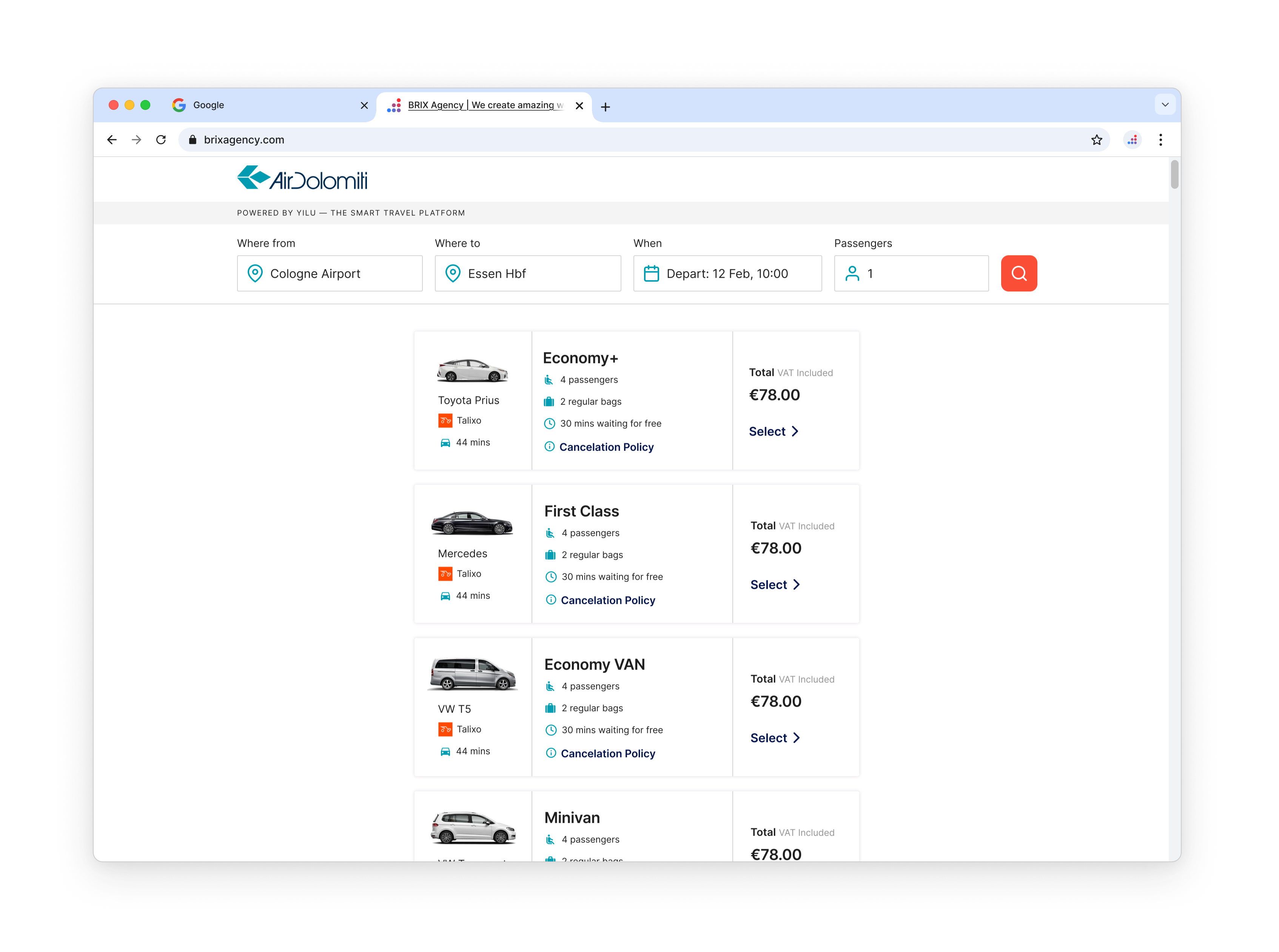
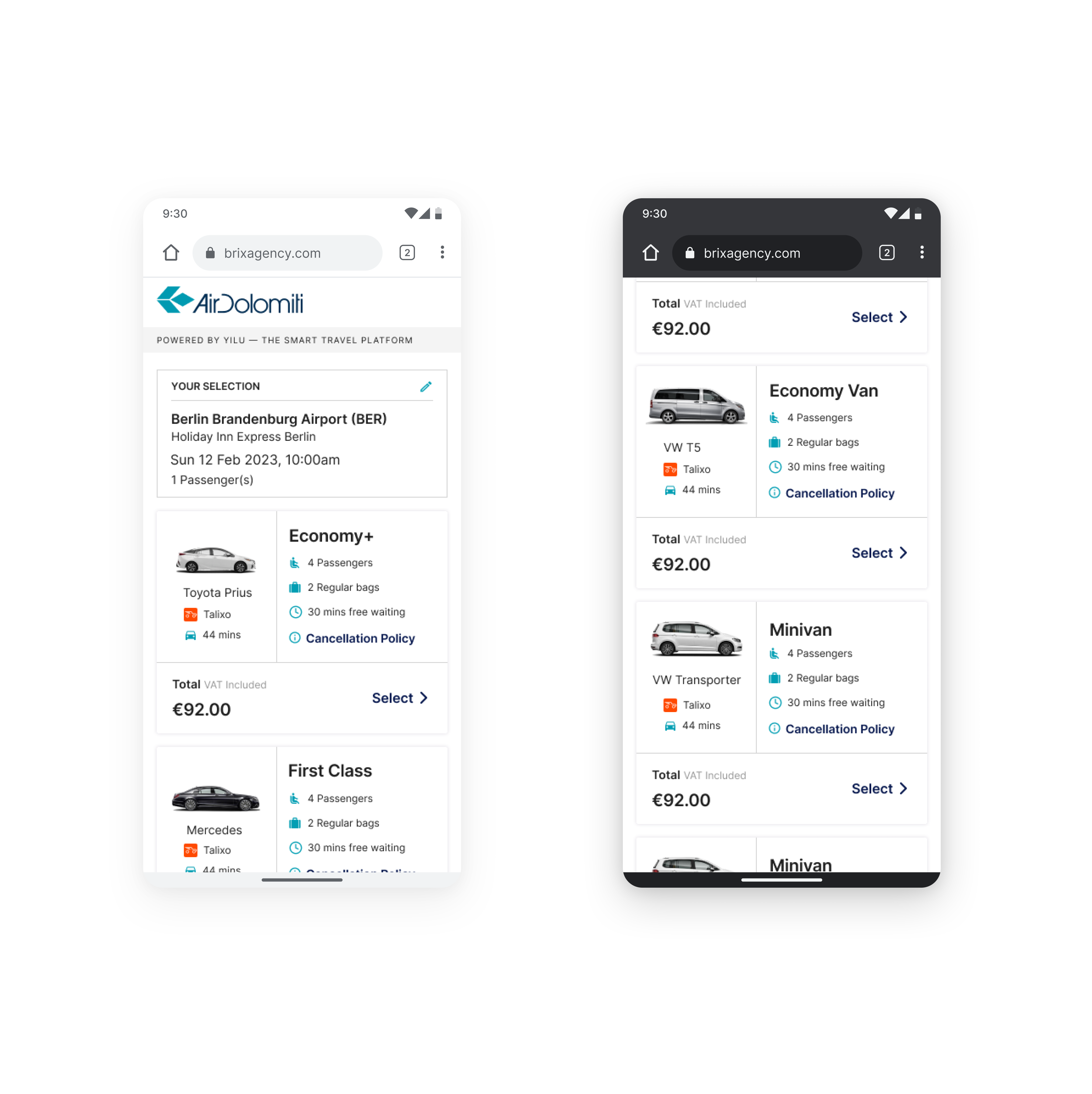
Single-Card Selection: Instead of a separate details page, we introduced a compact but informative card within the selection screen, displaying all relevant information.
Enhanced UI Elements: We refined the visual hierarchy, ensuring that key details like price, passenger capacity, and luggage allowance were easily scannable.
Final Solution
Select a car type while immediately seeing all essential details.
Reduce the number of clicks and screens required to complete the selection process.
Improve clarity with a structured and visually enhanced layout.
Results
Faster selection process: Users completed the selection step 40% quicker than before.
Increased conversion rates: A 15% reduction in drop-offs between car selection and the booking step.
Higher user satisfaction: Post-launch surveys indicated that 85% of users found the new process more intuitive and convenient.
Conclusion
By consolidating two steps into one, we improved the user experience, reduced friction, and increased efficiency. This case study demonstrates how small UX optimizations can have a significant impact on user engagement and business metrics.